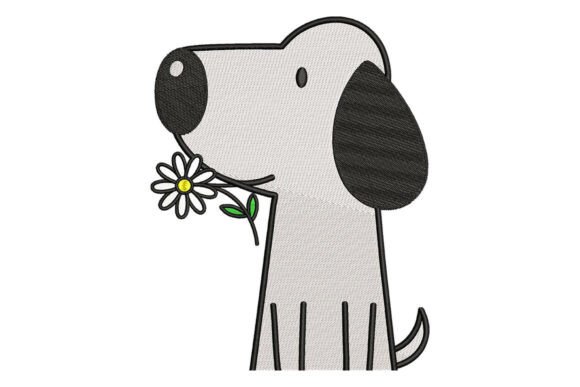
Dog with Daisy Flower Embroidery: A Business Review
As a professional embroidery designer who specializes in commercial merchandise and branded assets, I approach every new machine embroidery design with a critical eye toward production viability. When evaluating the Dog with Daisy Flower Embroidery for small business use, my primary focus is not just on its aesthetic charm, but on how it translates from a digital screen to a tangible, sellable product. This design features a sweet dog holding a daisy flower, expertly digitized with smooth tatami fill. For business owners, Etsy sellers, and apparel decorators, this specific digitizing style suggests a design that prioritizes coverage and texture over hyper-realistic detail, making it an excellent candidate for various commercial applications.
Visual Personality and Brand Alignment
The first impression of the Dog with Daisy Flower Embroidery is undeniably friendly and approachable. In the context of brand identity, this design communicates warmth, care, and organic quality. The combination of a canine subject with floral elements softens the visual tone, moving it away from aggressive or overly corporate aesthetics. This makes it particularly suitable for businesses that rely on personal connection and trust.
For a local bakery, florist, or pet grooming studio, this design serves as more than decoration; it acts as a visual shorthand for the business's values. The "smooth tatami fill" mentioned in the product description indicates a flat, woven stitch structure. This is crucial for small business merch because tatami fills provide excellent opacity and durability without the excessive puckering often associated with dense satin stitches. Visually, it reads as premium yet handmade, striking the perfect balance for boutique merchandise where customers expect high-quality craftsmanship.
Commercial Applications for Merchandise and Uniforms
When integrating this embroidery file into a product line, versatility is key. Based on the construction of the Dog with Daisy Flower Embroidery, I recommend the following specific applications for business growth:
- Embroidered Patches: The tatami fill structure is ideal for patch production. Unlike complex gradient fills, tatami holds its shape well when backed with heavy stabilizer and merrowed edges. This design would function beautifully as a morale patch for staff or a collectible add-on for customer orders.
- Apron Embroidery: For cafes and florists, aprons are prime real estate. Placing this design on the chest pocket area creates a welcoming focal point. The solid fill ensures the design remains visible against dark denim or canvas fabrics commonly used in workwear.
- Tote Bag Design: Canvas totes are a staple for handmade brands. The Dog with Daisy Flower Embroidery offers sufficient surface area to justify the price point of a branded bag while remaining lightweight enough not to distort the fabric grain.
- Cap Embroidery: While caps present challenges, this design’s likely compact footprint makes it a contender for unstructured dad hats. However, placement must be centered and scaled appropriately to accommodate the curve.
- Custom Apparel Accents: Beyond logos, this design works as a sleeve detail or hem accent on baby onesies and children’s wear, expanding the potential demographic for pet-themed brands.
Production Considerations and Technical Limitations
While the Dog with Daisy Flower Embroidery is versatile, professional results require respecting technical boundaries. As an experienced digitizer, I must highlight where caution is necessary during commercial embroidery production.
Fabric Texture and Stabilization
The smooth tatami fill requires a stable foundation. If you are stitching this onto textured fabrics like terry cloth towels or loose-knit sweaters, you must use appropriate stabilizer. Without adequate backing, the tatami stitches may sink into the fabric pile, causing the dog and daisy details to disappear. Always test on the actual garment material before running a full production batch. For stretchy knits, a cut-away stabilizer is non-negotiable to prevent distortion of the floral elements.
Sizing and Detail Integrity
Business owners often want to maximize logo size, but scaling down is usually the greater risk. You must verify the minimum size of this digital embroidery file before committing to small patches or cap fronts. Tatami fills have a minimum width requirement; if resized too small, the stitches can become jagged or cause thread breaks. Conversely, enlarging the design excessively can make the tatami look sparse or cardboard-like. Always check the original digitizer's recommended size range to maintain the integrity of the finished product.
Thread Colors and Contrast
The description highlights a dog holding a daisy, implying at least two distinct color zones. When adapting this for uniforms, ensure there is sufficient contrast between the dog, the flower, and the garment color. On dark uniforms, consider adding a white underlay or outline to make the design pop. If your brand palette differs from the stock colors, map out your thread colors digitally first to ensure the daisy doesn't blend into the dog’s fur.
Impact on Customer Trust and Product Value
In the competitive landscape of Etsy sellers and local shops, perceived value drives sales. A poorly executed embroidery job signals amateurism, whereas a crisp, well-digitized design like Dog with Daisy Flower Embroidery reinforces professionalism. The smooth texture of the tatami fill feels substantial to the touch, subconsciously signaling quality to the buyer.
Furthermore, consistent use of this design across multiple touchpoints—from packaging accents to staff uniforms—builds visual recognition. When customers see the same charming dog motif on your social media, your market stall banner, and your product labels, it creates a cohesive brand experience. This consistency is vital for handmade product lines where the story behind the item is as important as the item itself. The emotional resonance of a dog and flower combination also fosters engagement, making customers more likely to share photos of their purchase on social media.
Essential Designer Notes Before Production
Before loading this embroidery file into your machine for a client order or inventory run, follow this professional checklist to ensure success:
- Verify Licensing: Confirm that the purchase includes commercial rights for merchandise resale. Never assume a personal license covers business use.
- Check Hoop Size Compatibility: Ensure the design dimensions fit within your machine’s maximum embroidery area with adequate margin for hoop clearance.
- Run a Black and White Test: Print a line art version or view the design in grayscale to evaluate value separation. If the dog and daisy merge into one gray mass, adjust thread contrast before stitching.
- Create a Printable Mockup: Use software to overlay the design onto photos of your actual blanks. This helps visualize scale and placement relative to seams and pockets.
- Inspect Stitch Density: Open the file in editing software to check for overly dense areas that might perforate delicate fabrics. Adjust density parameters if necessary for specific materials.
- Test Wash Durability: If producing items for frequent washing (like aprons or kids' clothes), stitch a sample, wash it three times, and inspect for thread pull-out or fraying.
- Compare Beside Other Assets: Place this design next to your existing text logos or icons. Ensure the visual weight matches so one element doesn't overpower the other on co-branded items.
The Dog with Daisy Flower Embroidery represents a strong asset for businesses seeking to blend whimsy with professional execution. By understanding its technical characteristics and applying strategic placement, you can transform this charming design into a powerful tool for brand building and merchandise sales. Always prioritize testing and fabric compatibility to ensure that the final embroidered piece reflects the quality your customers expect.